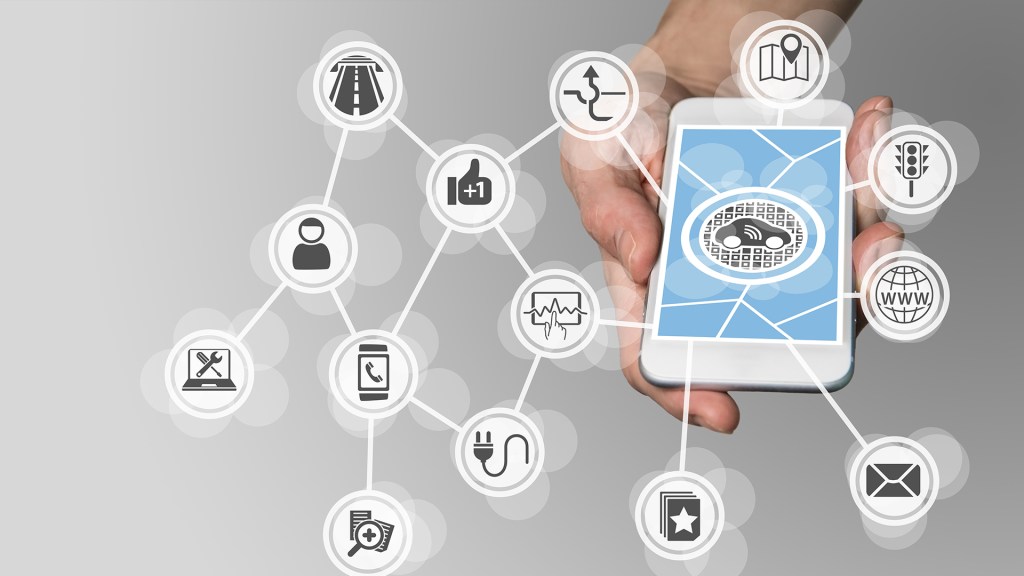
Traffic management refers to the act of directing vehicles and pedestrians around some form of disruption. This could be a building site, mishap, local area occasion, gridlock, tree expulsion, street clearing, or whatever else that could make risk or disturbance a vehicle or pedestrian.
By successfully managing traffic efficiently and safely, the chances of vehicles crashing can be significantly reduced, as well as other safety benefits.
There are many traffic management software solutions that can be implemented on the roads, and in this article, we will explain every aspect of the advanced traffic management system.
Quick Glimpse on Traffic Management System
According to the United States Department of Transportation “DOT”, traffic congestion can have three key sources. One is related to events that influence traffic, such as incidents, bad weather, and work zones. The second is identified with traffic demand, which implies variances in ordinary rush hour gridlock and extraordinary occasions. The last source is the vehicle foundation, which addresses the traffic control devices and actual bottlenecks.
Besides, these bottlenecks are liable for 40% of overall traffic congestion, trailed by traffic occurrences, for example, vehicle mishaps with roughly 20%, terrible climate conditions with 15%, extraordinary occasions with 5% and 10% work zones, and helpless traffic signal timing. Along these lines, focusing on forestalling traffic and further developing in general rush hour gridlock productivity, huge urban communities rely on traffic management systems.
A traffic management software aims to reduce traffic congestion and related problems. For this, traffic management systems are comprised of a bunch of utilizations and the management tools to coordinate correspondence, identification, and handling technologies.
TMS collects traffic-related data from heterogeneous sources, such as traffic lights, vehicles, and road and highway sensors. Furthermore, by aggregating and exploiting such traffic-related data cooperatively in a cloud-focused “TMC” traffic management center or data center, various traffic hazards can be identified and controlled accordingly, improving overall traffic efficiency and providing smooth traffic flow.
Top requirements of the Traffic Management System
To help you get started, we have selected a list of TMS requirements that you can use to decide what you will need from traffic management software.
Automatic Carrier Selection
Picking a transporter to deal with your shipments can be troublesome. You must consider a multitude of factors such as cost, geographic accessibility, and whether or not you will need multiple carriers. Your needs may also differ slightly from shipment to shipment. But you probably don’t have time to review and choose a carrier by hand for each package. That’s where car operator selection comes in.
Auto Attendant Selection manages all of your operator options in one place. Not exclusively does it helpfully concentrate your choice cycle, it additionally picks the best carrier consequently. The systems do this by taking into account factors such as cost, necessary equipment, insurance coverage, preference, and more. All of these are considered by an algorithm that determines the lowest cost option that can provide all other necessary aspects.
Automatic order processing
Modern systems use EDI “electronic data interchange” to standardize communication. EDI replaces manual means of communication, such as the mail, to speed up the exchange of information. EDI is useful in order processing, eliminating the need to enter orders manually. This reduces the time involved in data entry, but it also reduces errors. Using EDI, your system can automatically extract order data from other resources to automatically create orders.
Most systems will also allow you to create orders using non-EDI data. So for example, if your vendors still run very manual processes, you can still work with them without EDI. In addition, you can choose a system that will generate confirmation notifications that can be sent to the appropriate parties.
Multimodal shipments
Multimodal shipping involves a level of detail not seen in many other industries. Between the genuine coordination of overseeing different methods of transportation and the lawfulness of subcarriers, it very well may be useful to have traffic management software to deal with everything.
If you plan to implement multimodal shipping, make sure your transportation management software can handle all the modes you use. It consists of road, sea, air, and rail. Your system should handle the logistics of cross-border transportation, as well as any national considerations. You may also prefer a system that can handle cross-docking, which minimizes storage time and warehousing costs.
Real-time network traffic monitoring with TMS
Network traffic management refers to the most common way of blocking and examining network traffic and directing traffic to upgrade assets dependent on priorities. Key elements that should be monitored for better management of your network include network performance, security, and traffic. The network traffic control tool use the board procedures, for example, network execution and transfer speed checking, observing traffic examples to distinguish and forestall bottlenecks, network security investigation, and optimization to guarantee ideal organization activity. Helps maximize network performance and security by keeping network threats and congestion at bay.
Managing network traffic is critical to ensure you get the most out of your network; Comprehensive network traffic management software makes it much easier to understand what is happening on your network. In addition to ensuring that business-critical applications are prioritized, thus preventing non-critical applications from hogging your bandwidth, network traffic monitoring software offers other benefits, such as protecting your network from outages, helping you troubleshoot and solve problems faster and prevent potential bottlenecks manage your evolving network, identify security threats, and consequently increase ROI.
Traffic camera software integration
Traffic control cameras are an imaginative and incredibly useful utilization of video surveillance innovation. You have seen his images during traffic reports on television news. They are at the top of traffic lights and along busy roads and at busy highway intersections. Regardless of whether they are recording traffic patterns for future investigation and perception or monitoring traffic and giving tickets for traffic violations, speed cameras are a violently well-known type of video surveillance.
The traffic camera software is a worth added tool to assist with alleviating the burden on activities faculty performing manual reconnaissance, regardless of whether a tasks community is facilitating handfuls or many video transfers. Traffic camera software can proactively alert operations personnel based on the alert criteria they establish for the roads they are monitoring. Alerts can be seamlessly integrated into existing advanced traffic management software. These can dramatically reduce the effect of traffic incidents and improve overall safety.
Automated traffic light and pedestrian signal
We have certainly come a long way since the time of the 1850s when traffic lights were used to control traffic. They were simpler times, with gas lamps and streets with almost no vehicles. Today’s times are different; with automatic lights and a large number of vehicles on city streets, we need an improved traffic management system. Here, traffic management software and a computerized traffic light system surely appear to be practical alternatives for what’s to come.
Connected Vehicle Technology & Traffic Management System
A connected vehicle is one that can connect via wireless networks to nearby devices.
Connected vehicles are a significant factor in the headway of IoT. Use cases range from connected entertainment systems that connect to the driver’s mobile phone to Internet-connected vehicles that have two-way communication with other vehicles, mobile devices, and city intersections. The rapid growth of connected innovations is especially prevalent in shrewd urban communities and traffic management software today.
 Transportation Software Solutions